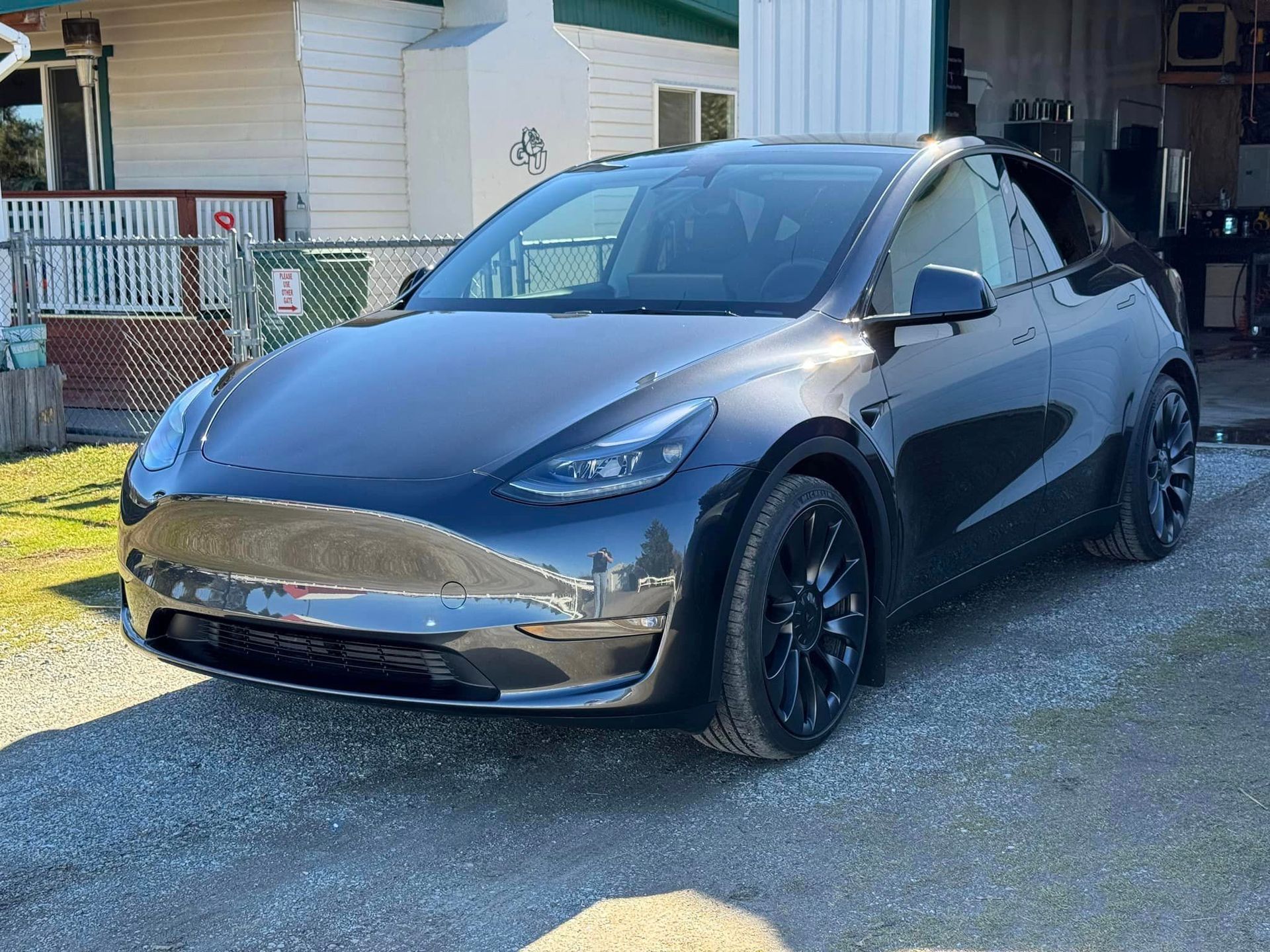
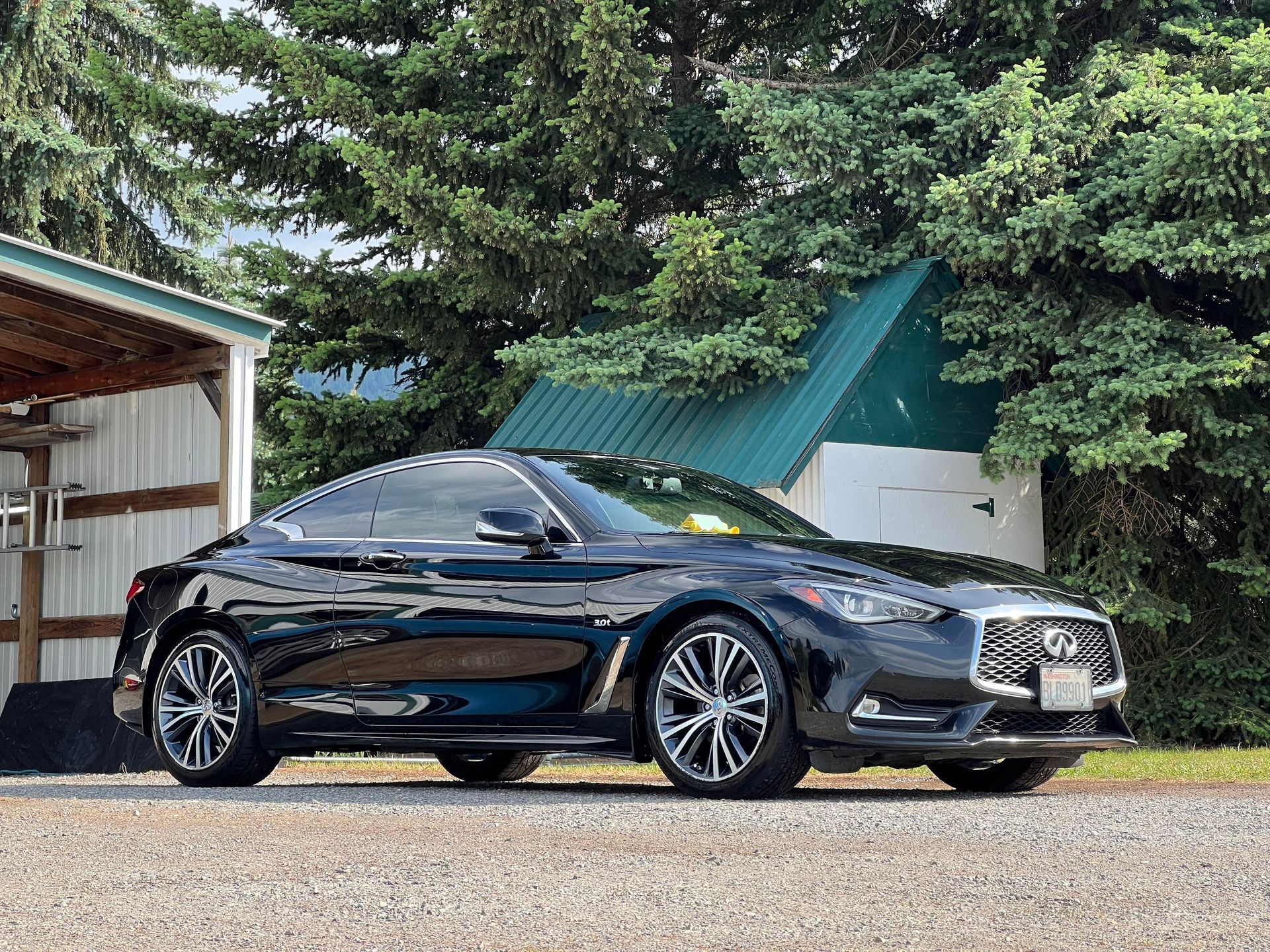
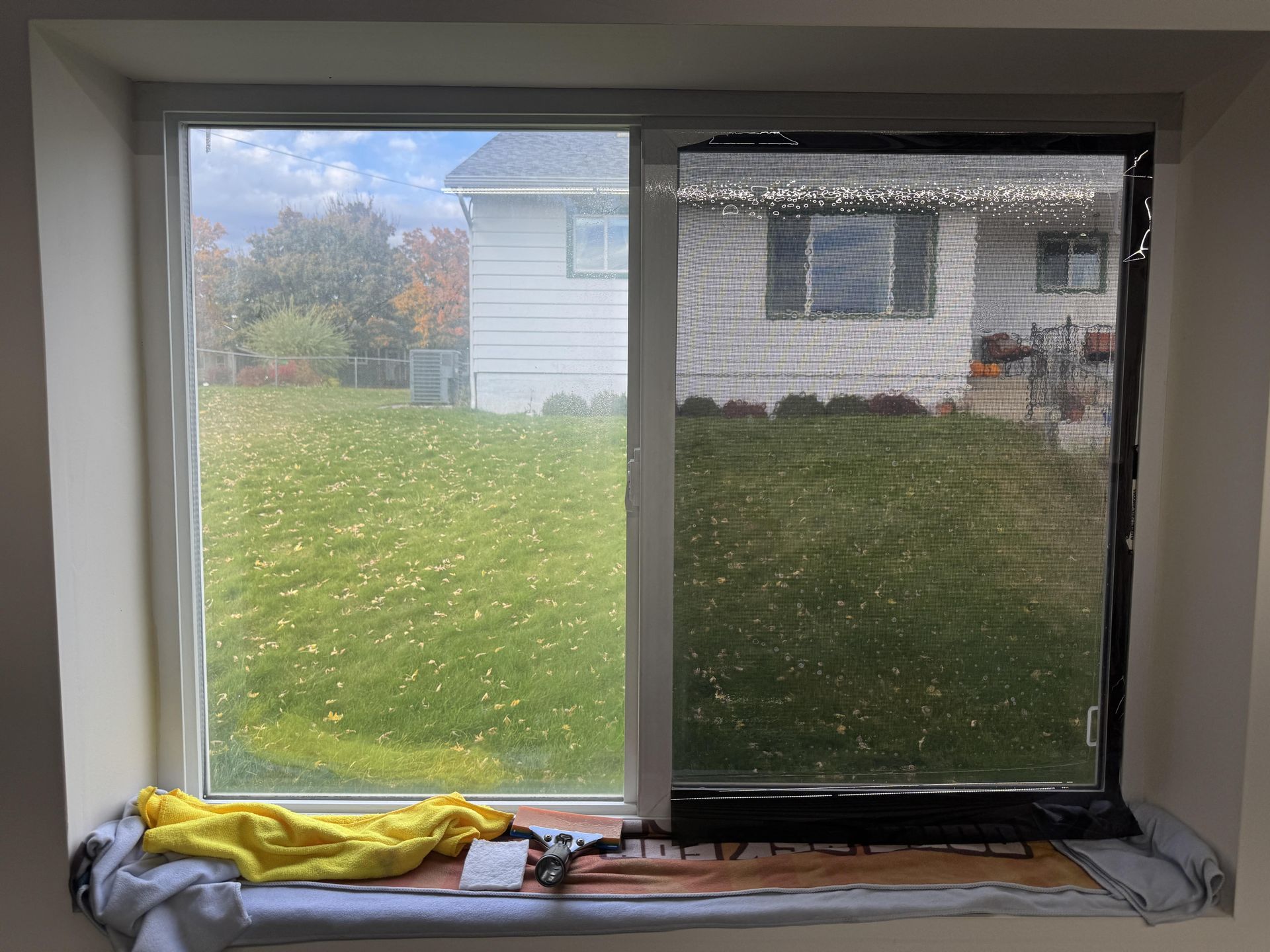
One of the first things we ask at our Coeur d'Alene shop is which state your vehicle is registered in. A lot of our customers live right here in North Idaho, in CDA and Post Falls, and we also tint for drivers who come over from Spokane, Spokane Valley, and Liberty Lake. Idaho and Washington don't set their tint limits the same way, so the right shade for your neighbor across the state line might not be the right shade for you.
Here's a plain-English look at what each state's law says, window by window, with links to the actual laws so you can read them yourself.
Quick note before we start: I install tint, I'm not a lawyer. This is a summary of the laws as we read them in October 2026. It isn't legal advice, and laws can change, so check the official pages linked below before you choose a shade.
How tint darkness is measured
Tint darkness is measured as light transmission, often called VLT. It's the percentage of light that makes it through the window. The lower the number, the darker the window. A 35% window lets about 35% of the light through; a 20% window is darker.
Both states also limit reflectance, which is how much light the window bounces back like a mirror. That's why you won't see mirror-look tint on a legal install in either state.
One more thing that trips people up: Washington's law sets its limits on the "net" result, meaning the shading built into the glass plus any film added on top. That's why we look at your glass before we pick a film.
Idaho window tint law (Idaho Code 49-944)
Idaho's rules are in Idaho Code 49-944. The law allows a 3% tolerance either way on each number below, and it doesn't set different limits for cars, SUVs, trucks, and vans.
- Windshield: No tint below the AS-1 line. If your windshield doesn't have an AS-1 line marked, the law uses a line six inches down from the top instead.
- Front side windows(the driver and front passenger windows, plus front vent windows): at least 35% light transmission.
- Rear side windows(side windows behind the driver): at least 20% light transmission.
- Rear window: at least 35% light transmission. This surprises people, since it's lighter than what's allowed on the rear side windows.
- Reflectance: no more than 35% on any of these windows, and the film has to be nonreflective.
- Factory glass: The law doesn't make a vehicle illegal for glass it came with from the manufacturer or dealer when it was new, like factory privacy glass.
- Medical exemption: If the driver or a passenger has written verification from a licensed physician that they need protection from sunlight or heat for medical reasons tied to past or current treatment, the law allows down to 70% on the windshield and 20% on the windows, with the same 35% reflectance limit. That written verification has to be carried in the vehicle.
Breaking the rule is an infraction in Idaho, and the law covers driving, selling, and installing tint that's out of spec.
Washington window tint law (RCW 46.37.430)
Washington's rules are in RCW 46.37.430, and the Washington State Patrol sums them up on its vehicle equipment requirements page.
- All windows except the windshield: at least 24% light transmission and no more than 35% reflectance, measured as the net of the glass and the film.
- SUVs, trucks, and vans: If the manufacturer identifies your vehicle as a truck, motor home, or multipurpose passenger vehicle, the windows behind the driver can go darker than 24%, as long as reflectance stays at 35% or less. The front side windows still have to meet 24%. Many SUVs and vans are classified as multipurpose passenger vehicles. The vehicle type is usually printed on the certification label on the driver's door or door frame, so check yours.
- Side mirrors: If any window other than the windshield is tinted, you need outside mirrors on both the left and right sides.
- Windshield: Tint is allowed along the top edge if it's transparent and doesn't go into the AS-1 area or more than six inches down from the top. Clear film that reduces or blocks UV is allowed on the windshield.
- One layer: Only a single sheet of film is allowed on any window.
- Not allowed at all: mirror finish film; red, gold, yellow, or black film; and liquid tint that's brushed or sprayed on.
- Medical exemption: With written verification from a licensed physician that the driver or a passenger needs protection from sunlight for physical or medical reasons, darker tint is allowed on all windows and the top six inches of the windshield. The WSP says there's no form to fill out; just carry the written verification in the vehicle and show it if law enforcement asks.
Driving with tint that doesn't meet the law is a traffic infraction in Washington. Under RCW 46.37.435, knowingly installing illegal tint is a misdemeanor, which is one reason a good shop will be straight with you about what's legal.
Idaho vs Washington tint laws side by side
| Window | Idaho | Washington |
|---|---|---|
| Windshield | No tint below the AS-1 line (or six inches from the top if there's no line) | Transparent tint on the top edge only, not into the AS-1 area or more than six inches down; clear UV film allowed |
| Front side windows | 35% or lighter | 24% or lighter |
| Rear side windows, cars | 20% or lighter | 24% or lighter |
| Rear side windows, SUVs, trucks, and vans | 20% or lighter | Can be darker than 24% |
| Rear window, cars | 35% or lighter | 24% or lighter |
| Rear window, SUVs, trucks, and vans | 35% or lighter | Can be darker than 24% |
| Reflectance | 35% or less | 35% or less |
| Medical exemption | Down to 70% windshield, 20% windows, with a physician's written verification in the vehicle | Darker on all windows and the top six inches of the windshield, with a physician's written verification in the vehicle |
Idaho numbers include a 3% tolerance either way. In Washington, SUVs, trucks, and vans means vehicles the manufacturer identifies as a truck, motor home, or multipurpose passenger vehicle, and darker rear windows still need both side mirrors and 35% or less reflectance.
What this means if you drive around CDA, Post Falls, and Spokane
The short version:
- Front side windows: Idaho is stricter (35%) than Washington (24%).
- Rear side windows on a car: Idaho allows darker (20%) than Washington (24%).
- Rear window: Idaho is stricter (35%) than Washington (24%), and Washington lets SUVs, trucks, and vans go darker behind the driver.
- Windshield: Outside the medical exemptions, both states keep darker tint to the top of the windshield, and Washington's law spells out that clear UV film is allowed on the windshield. Our full windshield ceramic film is about 75% VLT. It's great for heat rejection and UV protection, but legally it's for off-road use only.
Please check the tint laws for the state your vehicle is registered in before choosing a shade. Any tint outside those laws is considered for off-road use only. When you come in, we'll help you pick a shade that fits how you drive and the rules for your state.
Staying legal doesn't mean giving up comfort
A lot of people assume legal tint means less heat protection. It doesn't have to. The heat you feel is about the film, not only how dark it is. With our ceramic film, you'll feel about 70% less heat coming through the glass, and clear ceramic tint is hardly noticeable on the glass while still giving you that same heat reduction. That makes clear ceramic a good fit if you want the comfort without going darker than your state allows. For more, read is ceramic tint worth it?
If your SUV or truck already has dark factory glass in the back, read factory privacy glass vs window tint before you add anything on top.
For the front two windows, you can choose carbon or ceramic. Everything else we tint is ceramic. To see what it costs, read how much is window tinting.
Read the laws yourself
- Idaho: Idaho Code 49-944, Standards for windshields and windows of motor vehicles
- Washington: RCW 46.37.430, Safety glazing, sunscreening or coloring
- Washington: RCW 46.37.435, Unlawful installation of film sunscreening material
- Washington State Patrol: Vehicle and equipment requirements, window tinting
Window tint law FAQ
How dark can you legally tint your windows in Idaho?
Under Idaho Code 49-944, the front side windows and the rear window need at least 35% light transmission, and the side windows behind the driver need at least 20%, each with a 3% tolerance. Reflectance can't be more than 35%, and windshield tint has to stay above the AS-1 line.
How dark can you legally tint your windows in Washington?
Under RCW 46.37.430, every window except the windshield needs at least 24% light transmission and no more than 35% reflectance, and you need side mirrors on both sides. Trucks, motor homes, and multipurpose passenger vehicles can go darker on the windows behind the driver.
Can SUVs and trucks have darker tint than cars?
In Washington, yes, on the windows behind the driver, if the manufacturer identifies the vehicle as a truck, motor home, or multipurpose passenger vehicle and reflectance stays at 35% or less. Idaho's law doesn't set different limits by vehicle type.
Can I tint my windshield in Idaho or Washington?
In Idaho, only the top of it: no tint below the AS-1 line, or six inches from the top if there's no line, unless the medical exemption applies. Washington allows transparent tint along the top edge, no lower than the AS-1 area or six inches, and it allows clear film that reduces UV on the windshield. Our full windshield ceramic film is about 75% VLT. It's great for heat rejection and UV protection, but legally it's for off-road use only.
Is there a medical exemption for window tint?
Both states have one. In Idaho, written verification from a licensed physician allows down to 70% on the windshield and 20% on the windows. In Washington, it allows darker tint on all windows and the top six inches of the windshield. In both states, carry the written verification in the vehicle.
Is this legal advice?
No. This is a plain-English summary of the laws as we read them in October 2026. Laws can change, so check the official Idaho and Washington pages linked in this post before choosing a shade.
Questions about tint for your vehicle?
If you're not sure what's legal for your car, SUV, or truck, we're happy to talk it through. Call us at (208) 244-6961, stop by the shop, or send us a note through our contact form with your year, make, and model and the state your vehicle is registered in. We'll give you a straight answer.
Our shop is at 710 W Dalton Ave, Unit C, in Coeur d'Alene.
Thanks for reading, and I hope to see you at the shop.
Matt
Glänzen PPF + Ceramic Coatings, Coeur d'Alene, ID